When NASA Let AI Drive on Mars
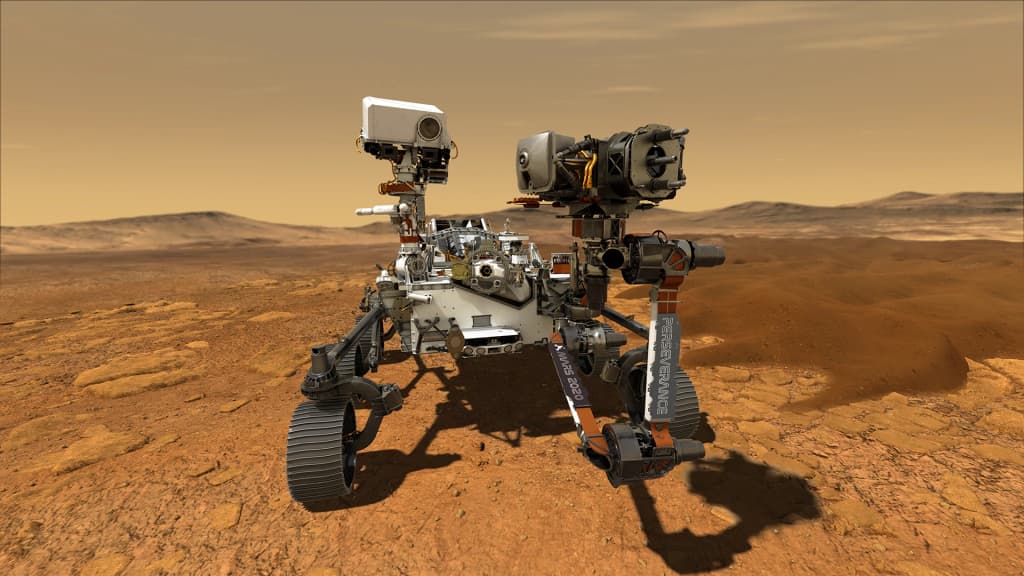
NASA's Perseverance rover was cruising across Mars one December morning when something unusual happened.
The commands came not from mission control in Pasadena. They came from inside the rover itself.
For the first time in history, an AI planned a route across another world.
The Drive That Changed Everything
On December 26, 2025, NASA's Perseverance rover completed a 75-meter drive across the Martian surface. The route was planned entirely by artificial intelligence — no human approved the path, no engineer plotted the coordinates, no mission controller reviewed the plan.
The AI analyzed navcam images, combined them with rover telemetry data, identified hazards like rocks and sand ripples, and charted a safe path across the Red Planet. By the time humans on Earth woke up to review what had happened, the rover was already there.
"The team for the six-wheeled scientist used a vision-capable AI to create a safe route over the Red Planet's surface without the input of human route planners," NASA confirmed.
This wasn't a demo. It wasn't a test. It was a milestone — the first autonomous traverse on another world planned by machine intelligence.
Why This Matters
Route planning on Mars is not trivial. The terrain is treacherous. Rocks, sand ripples, and hidden hazards can trap a rover for weeks. Every meter traversed must be carefully considered.
Traditionally, this work falls to a team of human route planners who painstakingly analyze images, assess risks, and construct a path forward. The process takes hours, sometimes days. Every command sequence is reviewed, double-checked, and approved.
With AI in the driver's seat, that timeline collapsed. The vision-capable AI processed the same images and terrain data that humans use — then made decisions faster than any human ever could.
NASA called it a "labor-intensive decision-making process typically performed by human planners" that has now been automated.
What This Means for Mars Exploration
The implications extend far beyond a single drive.
Speed: AI can plan routes while humans sleep. The 75-meter December drive was just the beginning. Future missions could cover kilometers of Martian terrain in days instead of weeks.
Autonomy: Light takes up to 24 minutes to travel between Earth and Mars. At that distance, real-time human control is impossible. AI planners bridge the gap — making decisions in milliseconds rather than waiting 48 minutes for a round-trip conversation.
Scale: A single human team can only plan so many routes. AI agents could theoretically coordinate multiple rovers, landers, and future habitats simultaneously — building the infrastructure for a permanent Mars presence.
The Bigger Picture
This isn't happening in isolation.
On Earth, enterprises are deploying 1.5 million AI agents with minimal oversight. In space, NASA is trusting AI to navigate robots millions of miles away. The parallel is striking: autonomy is spreading everywhere, from call centers to the surface of Mars.
The Mars drive proves AI can handle consequential decisions without human intervention. It proves trust in autonomous systems is no longer theoretical — it's operational.
The question is no longer whether AI can plan routes on Mars.
The question is whether we're ready for everything else AI will plan next.
What Comes Next
NASA hasn't released details on how often the AI now plans routes. But the door is open. Future missions — including the Sample Return Landing Zone selection — could rely heavily on autonomous planning.
And somewhere on Mars, a rover is still operating. It wakes up, analyzes its surroundings, and decides where to go next.
All without asking permission.
Sources:
- ScienceDaily — NASA AI-planned Mars drive
- NASA JPL — Perseverance rover autonomous driving
- Google Blog — AI at Google